First Month of Pregnancy Symptoms: 12 Signs the NHS Lists
The NHS lists 12 early signs of pregnancy, usually starting at 4 to 6 weeks. Each one, why the first month can show none of them, and when a test is reliable.
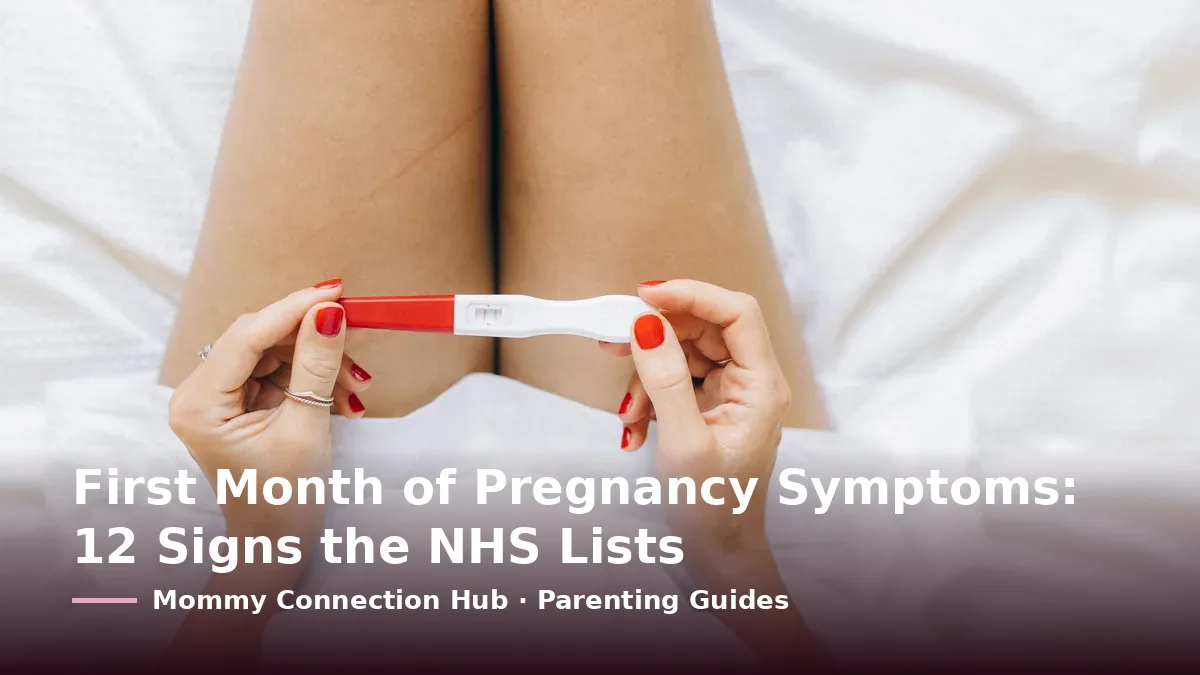
Your period is a few days late, or not late yet, and you are lying awake auditing every twinge. The NHS page on early signs of pregnancy is short, and its first line of substance is this: “Symptoms and early signs of pregnancy usually start when you’re around 4 to 6 weeks pregnant.” Counted the standard way, from the first day of your last period, those first weeks are largely before anything on the list shows. Here are the 12 signs the page names, what the page says about each, and when a test will answer the question.
The quick answer
| Sign, as the NHS words it | What the page adds |
|---|---|
| Missed period | The first item on the list |
| A bleed similar to a very light period, with some spotting or only a little blood, around the time your period is due | “this is known as implantation bleeding” |
| Feeling or being sick | “vomiting and morning sickness can happen at any time of the day or night” |
| Feeling extremely tired after doing your usual daily activities | |
| Sore breasts | “your breasts may become larger and feel tender, just as they might do before your period” |
| Needing to pee more often than usual | “without pain or discomfort” |
| Constipation | |
| More vaginal discharge | “without any soreness or irritation” |
| A metallic taste in your mouth | |
| A sensitivity to certain smells | |
| Cravings for new foods or a loss of interest in foods you usually enjoy | |
| Changes in your mood | “you might feel lots of different emotions” |
“Every pregnancy is different, so you may not have all these symptoms,” the page says, and again: “Not everyone has all of these symptoms.”
Why “first month” and “first symptoms” are not the same thing
The NHS puts the usual start of symptoms at 4 to 6 weeks. If you count pregnancy the standard way, from the first day of your last period, week 4 on a 28-day cycle is when the next period is due. So for most of the calendar month after conception you are, on the page’s own timeline, in the window before symptoms usually begin, and the one sign you can act on is the missed period itself. That counting is ours; the 4 to 6 weeks is the NHS’s.
It also means that a symptom-free first month is not information either way. The page’s line is that not everyone has all of these symptoms; it does not say that everyone has some of them by a given week.
The three signs that look like a period
Three items on the list overlap with what a period or the days before one feel like: the light bleed “around the time your period is due”, sore breasts “just as they might do before your period”, and mood changes. The page also qualifies two of the twelve: peeing more often counts “without pain or discomfort”, and more discharge counts “without any soreness or irritation”. Pain or soreness alongside either is a different question, covered below.
When a test will actually tell you
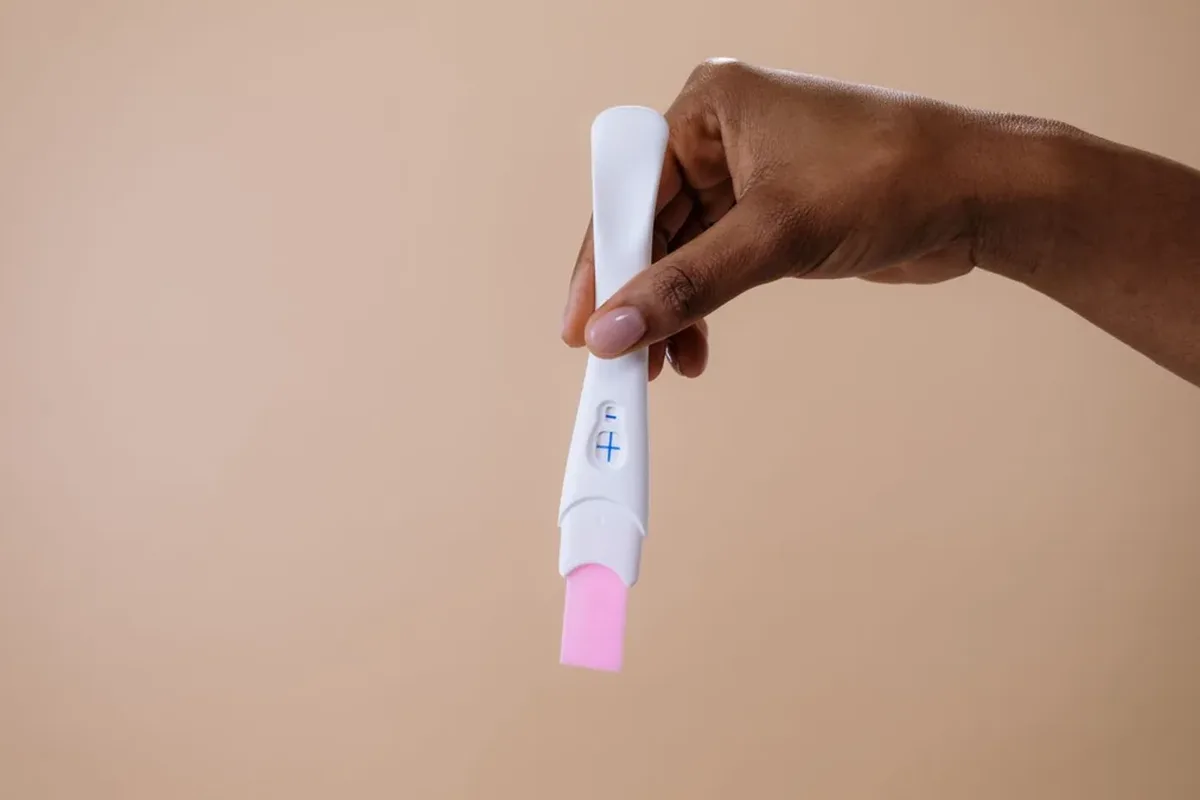
Symptoms suggest; a test answers. The NHS pregnancy test page sets out the timing:
- Tests “are most reliable from the first day of your missed period”.
- If you do not know when your next period is due, “do the test at least 21 days after you last had unprotected sex”.
- “Some very sensitive pregnancy tests can be used even before you miss a period.”
- The test can be done “on a sample of urine collected at any time of the day. It doesn’t have to be in the morning.”
- All tests detect hCG, “which starts to be produced around 6 days after fertilisation”.
On reading the result: “A positive test result is almost certainly correct. However, a negative test result is less reliable.” Testing too early is one of the reasons the page gives for an unreliable result, so “if you get a negative result and still think you’re pregnant, wait a few days and try again”, and “speak to your GP if you get a negative result after a second test but your period has not arrived”. The timing after a specific night is worked through in how soon after unprotected sex can you take a pregnancy test.
Tests are sold in pharmacies and some supermarkets; the page says sexual health services provide them free, and that you “may also be able to get a pregnancy test free of charge from your GP”.
When to get advice rather than wait
The symptoms page draws its own line: “Some of the early signs of pregnancy are usually nothing to worry about. But there are some symptoms to look out for as they may be a sign of something more serious, such as vaginal bleeding, stomach pain and pelvic pain. If you’re worried about your health or your baby’s health at any time, it’s important to get medical advice.” Note what that does to the second item in the table: light spotting around the time of your period is on the signs list, while vaginal bleeding is on the get-advice list, and the page does not give you a rule for telling them apart. That is the point at which to ask, not to search.
If the test is positive
The NHS asks you to refer yourself for pregnancy care “as soon as possible after you find out you’re pregnant”. What changes on the food side first is in nutrition during pregnancy, and if you are still at the trying stage, the pre-pregnancy checks are in tips for getting pregnant. Everything on this stage is under pregnancy.
Sources
All twelve signs, the 4-to-6-week figure and the get-advice line are quoted from the NHS page “Signs and symptoms that might mean you’re pregnant” (last reviewed 31 July 2026); the testing rules are from “Doing a pregnancy test”. Both read on 21 September 2026. The observation that the first month sits before the usual start of symptoms is our reading of those two dates.
Frequently asked questions
What are the earliest signs of pregnancy?
The NHS lists 12: a missed period, light implantation bleeding, feeling or being sick, extreme tiredness, sore breasts, peeing more often, constipation, more discharge, a metallic taste, smell sensitivity, food cravings or aversions, and mood changes. It says they usually start around 4 to 6 weeks.
Can you have pregnancy symptoms in the first month?
Usually not many. The NHS puts the usual start of symptoms at 4 to 6 weeks. If you count pregnancy in the standard way, from the first day of your last period, 4 weeks on a 28-day cycle is when the next period is due, so before that the missed period is the sign to act on.
How soon can a pregnancy test tell?
From the first day of a missed period for most tests, the NHS says, or at least 21 days after unprotected sex if you do not know when your period is due. A positive is almost certainly correct; a negative is less reliable, so repeat it after a few days.
- #early pregnancy
- #pregnancy symptoms
- #pregnancy test